
The most commonly mentioned symptoms of POTS include a racing heart, dizziness or lightheadedness when upright, fatigue, brain fog, and nausea. People with POTS can experience several symptoms at once—and many experience more than this short list covers.
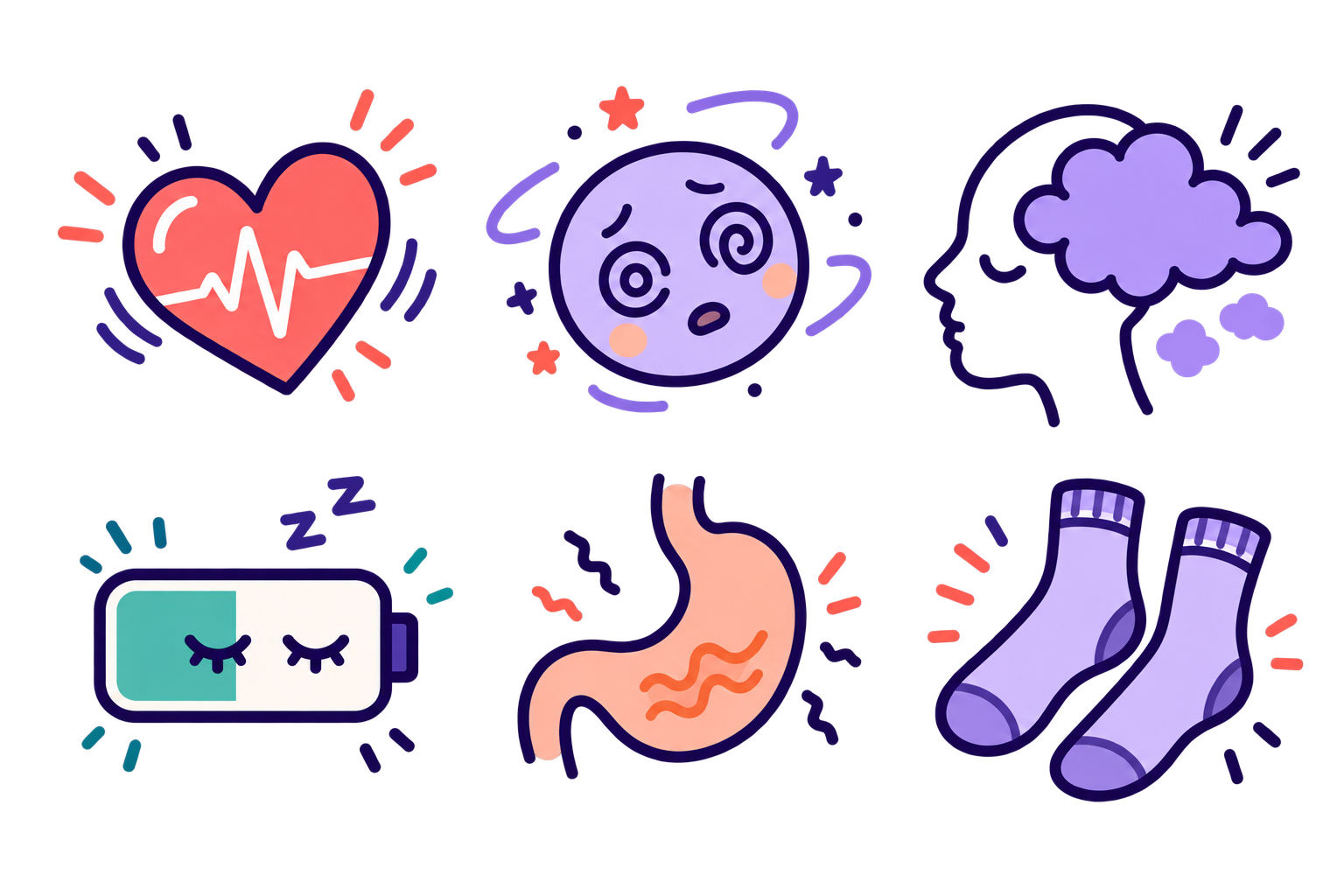
Common POTS symptoms
POTS stands for postural orthostatic tachycardia syndrome. One of its defining features is an excessive rise in heart rate when you stand, along with symptoms that tend to worsen when you’re upright. Those symptoms can show up in more ways than a fast heart rate:
- Heart and circulation: a racing or pounding heart, palpitations, dizziness, lightheadedness, or feeling faint. Some people faint (called syncope), but others don’t.
- Energy and thinking: fatigue, difficulty exercising, disrupted sleep, and brain fog that makes it hard to concentrate or remember things.
- Stomach and digestion: nausea, bloating, diarrhea, or severe constipation. In a study of over 8,000 POTS patients, 57.9% had at least one gastrointestinal symptom.
- Other physical symptoms: shakiness, sweating, headaches, blurry vision, shortness of breath, feeling overheated, chest discomfort, or purple discoloration in the hands and feet.
POTS symptoms can be different for everyone, and you don’t need to experience all of them.
What does POTS feel like?
For some people, standing brings on a pounding heart and a wave of lightheadedness. Others notice exhaustion, trouble thinking clearly, or nausea. Symptoms may build while you’re upright and ease when you sit or lie down, but the experience isn’t identical for everyone.
My experience
For me, the worst part was the chronic heart palpitations. I felt them all day, every day, for over a year, along with an ache in my chest. They were often worse at night when I was trying to fall asleep because I couldn’t distract myself with other activities. The palpitations often kept me from getting the rest I needed.
I never fainted, even though descriptions of POTS often lead with dizziness or passing out. I was exhausted. My speech, expressions, and movements felt sluggish, and I could barely walk. With the palpitations and chest discomfort, each step felt like climbing a mountain.
When do POTS symptoms get worse?
A trigger is something that makes symptoms worse. Standing up or spending a long time on your feet are common triggers, but they aren’t the only ones. Heat, including hot showers and summer weather, can make symptoms worse too. Some people notice changes after a meal, during an illness, after strenuous activity, or around their period. Triggers vary from person to person. Knowing your triggers can help you avoid or prepare for things that make your POTS symptoms worse and make everyday life more manageable.
Track when your symptoms get worse, what was happening beforehand, and what helped you feel better. Over time, this can help you recognize patterns, prepare for triggers, and identify strategies that help you manage them.
Why can eating make POTS symptoms worse?
A few months after I was diagnosed, I had two tacos and chips with guacamole for dinner. The meal was great. I was so excited to eat tacos. I hadn’t had them in almost a year since I got sick. What followed wasn’t great; I spent more than an hour sitting in a chair, waiting for my heart palpitations to settle and the room to stop spinning.
Some people with POTS feel worse after eating, especially after a large or carbohydrate-heavy meal, a meal that is high in fat, or a meal with a high glycemic index. Digestion increases blood flow to the gut, which may contribute to symptoms for some people.
What is a POTS flare?
A POTS flare is a period when your usual symptoms become noticeably worse. Someone who normally feels mildly lightheaded when standing might have a day when standing feels much harder; someone else might notice more palpitations, fatigue, or brain fog. A flare doesn’t feel the same for everyone.
Flare duration also varies. Flares can last anywhere from a few hours to months, depending on the trigger and how your body reacts. On hot days, my symptoms easily flare up just from being outside. An hour sitting down with a cool, salty beverage often clears them up for a bit. I’ve also had flares last for two weeks to a month straight, when every day I stood up, my heart rate would spike to 140 just from standing.
Do these symptoms mean I have POTS?
Not necessarily. Palpitations, dizziness, and fatigue can also happen with anemia, dehydration, thyroid problems, infections, or medication effects. You can have POTS alongside another condition, too. If you’re experiencing these symptoms and don’t know why, see a doctor. They can review your history, check your heart rate and blood pressure when you change position, and decide whether other tests are needed. A symptom list alone can’t diagnose POTS.
Bring your symptom history to your doctor
It can be hard to remember what happened on a bad day once you’re sitting in an appointment. Bring any symptom history you already have: what you felt, when it happened, whether you were sitting or standing, and what seemed to make it better or worse. If you have heart rate or blood pressure readings, bring those too. This gives your doctor more context to evaluate your symptoms and consider possible causes. You also don’t need to wait until you’ve collected notes to make an appointment.